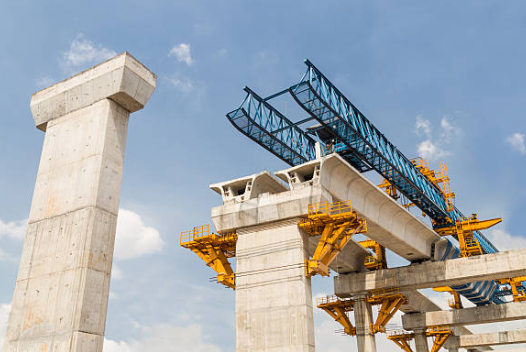
Government Unveils Major Infrastructure Development Plan
June 2, 2025

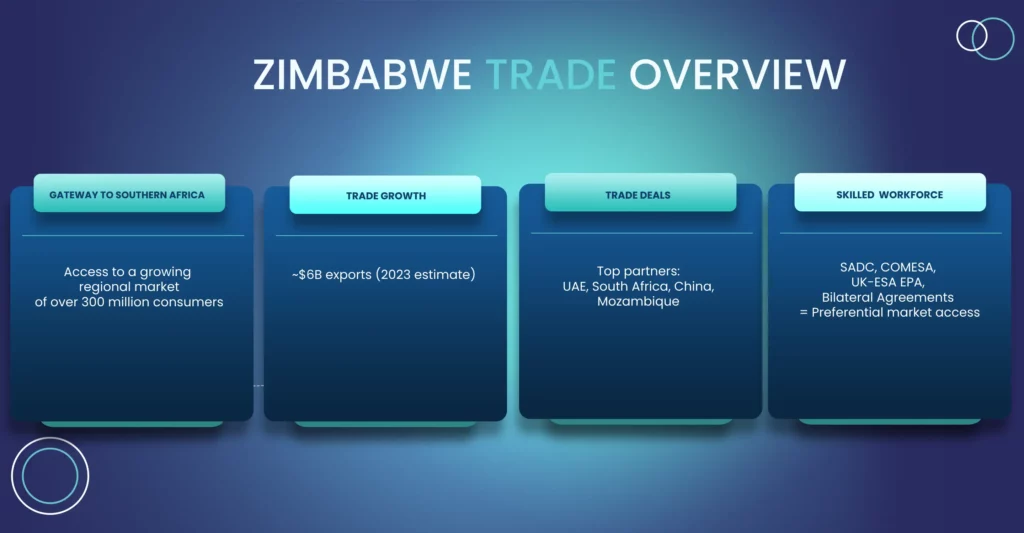

Zimbabwe offers a strategic geographic position, providing access to the wider Southern African Development Community (SADC) and Common Market for Eastern and Southern Africa (COMESA) regions.

The country is endowed with a diverse range of mineral resources, including gold, platinum group metals (PGMs), diamonds, lithium, chrome, and coal, offering significant opportunities in the extractive sector. It also has fertile agricultural land.
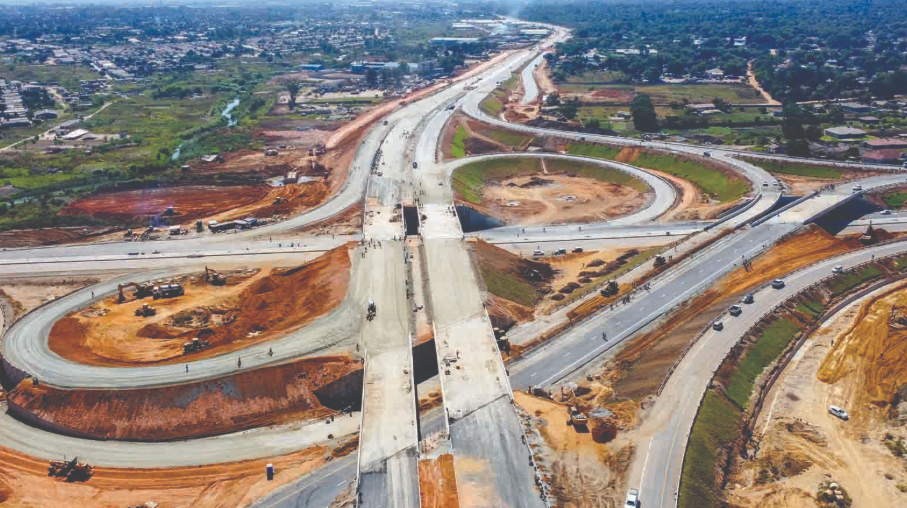
Zimbabwe has an established network of roads, railways, and airports connecting to key regional and international markets. Ongoing efforts are aimed at rehabilitating and upgrading this infrastructure to boost trade efficiency.

Zimbabwe is a member of SADC and COMESA, providing preferential access to a large regional market. It also has trade agreements with the UK (ESA EPA) and various bilateral arrangements that can reduce trade barriers.

The nation boasts a high literacy rate and a pool of skilled and semi-skilled labour, particularly in agriculture, mining, and manufacturing, often at competitive wage levels.

Opportunities for trade exist across various sectors, notably in mining, agriculture (tobacco, horticulture, sugar), manufacturing (food processing, textiles), and tourism.

The government is actively promoting the diversification of its export base beyond traditional commodities, encouraging value addition and the growth of non-traditional exports.

Zimbabwe is actively working on re-engaging with the international community, which could lead to improved trade relations and access to new markets.



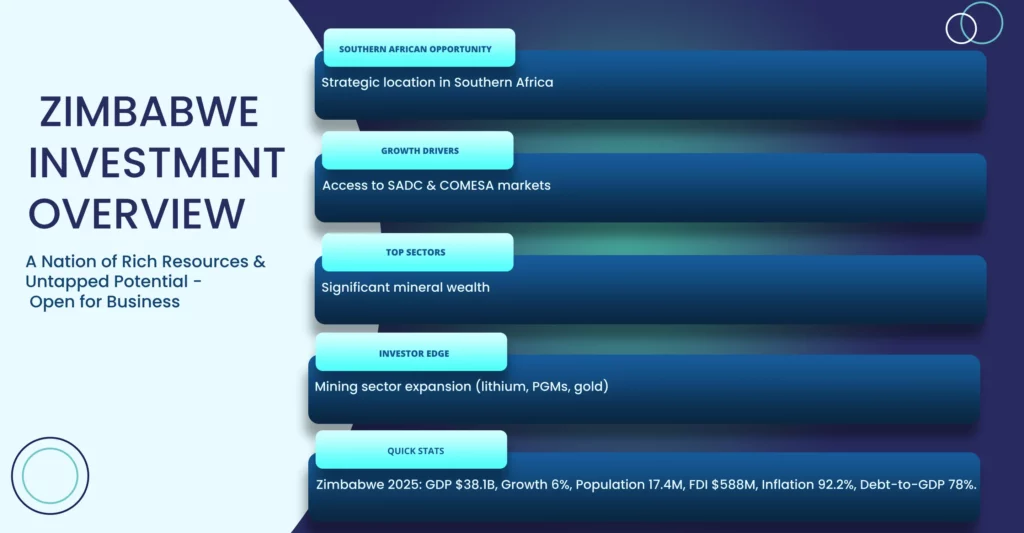
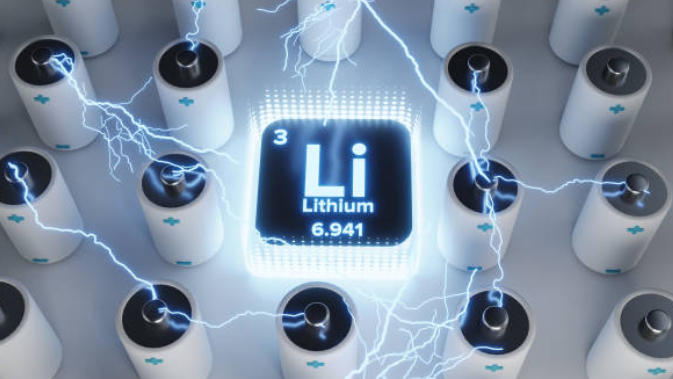
Zimbabwe possesses vast and diverse mineral resources, including significant deposits of platinum, gold, diamonds, lithium (critical for the green economy), chrome, and coal, presenting major investment opportunities.
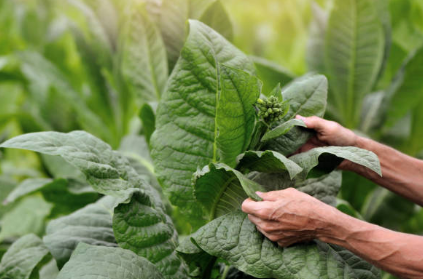
The country has large tracts of fertile land and a favourable climate for a variety of crops, including tobacco, cotton, sugar, horticultural products, and livestock, offering potential in farming and agro-processing.

Zimbabwe is home to iconic tourist attractions such as Victoria Falls (a UNESCO World Heritage site), diverse wildlife parks (e.g., Hwange, Mana Pools), and the Great Zimbabwe Monuments, offering significant opportunities in the tourism and hospitality sector.
Its central location in Southern Africa, coupled with membership in SADC and COMESA, provides access to a large regional market for goods and services.

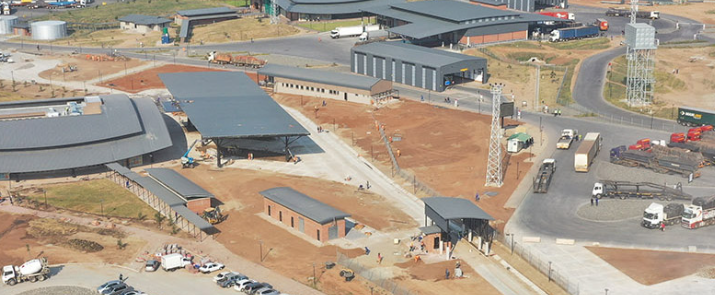
Zimbabwe has designated SEZs offering a range of incentives for investors, including tax breaks, duty-free importation of capital equipment, and streamlined regulatory processes in areas like Victoria Falls, Bulawayo, and Harare.
There is a recognized need and government focus on rehabilitating and developing key infrastructure (energy, transport, water), creating opportunities for public-private partnerships (PPPs) and direct investment.

With abundant sunshine and other renewable resources, Zimbabwe offers growing opportunities in the renewable energy sector, particularly in solar power, as the country seeks to address energy shortages and promote cleaner energy.
The Zimbabwean government has expressed a commitment to economic reforms aimed at improving the business environment, attracting foreign investment, and ensuring investor protection.

Zimbabwe has world-class deposits of platinum group metals, gold, diamonds, lithium, chromite, coal, and nickel. Opportunities exist in exploration, extraction, and beneficiation.
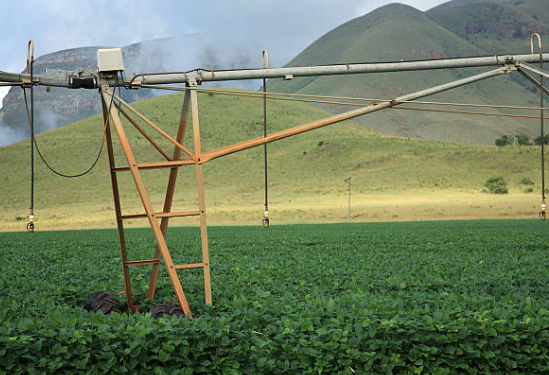
Rich agricultural land supports tobacco (a major export), cotton, sugar, tea, coffee, horticulture (flowers, fruits, vegetables), and livestock. Value addition and agro-processing are key growth areas.

Potential for growth in food and beverages, textiles and clothing, engineering, and construction materials. Import substitution and export-oriented manufacturing are encouraged.
Significant potential for solar power projects, and to a lesser extent, hydro and biomass energy. Investment is crucial for enhancing energy security and diversifying the energy mix.

Zimbabwe offers diverse attractions including Victoria Falls, wildlife safaris in national parks like Hwange and Mana Pools, the Eastern Highlands, and cultural heritage sites. Investment is needed in accommodation, tour operations, and infrastructure.
Stay updated with the latest developments and headlines from Zimbabwe, covering economic growth, investment, and national progress.
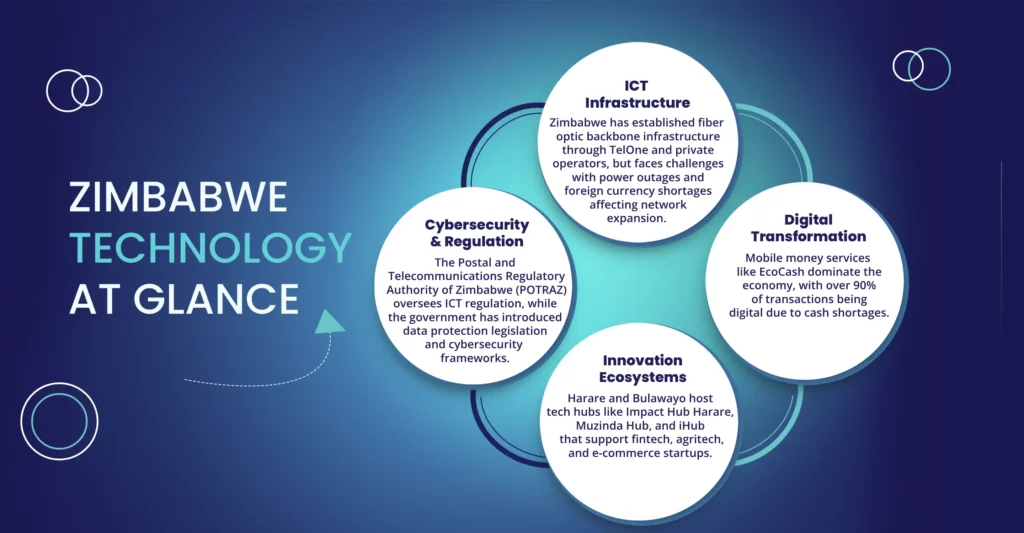

Driven by high mobile penetration, this sector is prominent, with mobile money services being a cornerstone of the payments landscape. Innovations focus on enhancing financial inclusion, cross-border payments, and digital lending, though regulatory evolution and infrastructure are ongoing areas of development.

Technology is increasingly being applied to optimise agricultural output and sustainability. This includes the use of mobile advisory services, climate information systems, precision agriculture techniques (where feasible), and solutions for improving market access for farmers. Addressing food security and enhancing value chains are key objectives.

There is a growing interest in leveraging technology to improve healthcare delivery, particularly in remote and underserved areas. Telemedicine initiatives, health information systems, and mobile health applications are emerging to enhance access, efficiency, and health outcomes.

While still developing, the e-commerce sector is growing, supported by increasing internet access and a youthful population. Challenges include logistics and payment gateway integration, but there is potential for online marketplaces, digital retail solutions, and delivery services.
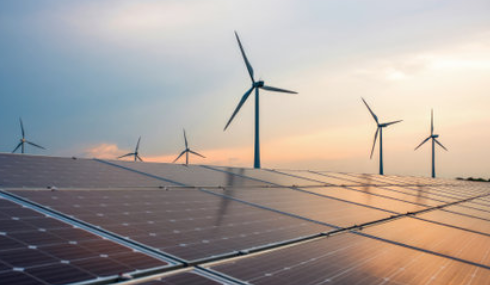
This sector is gaining traction with a focus on solar energy solutions to address energy deficits and promote sustainability. Technology in smart metering, off-grid solutions, and energy efficiency is becoming increasingly important.

Efforts are underway to integrate technology into education, providing digital learning resources, online training platforms, and tools to enhance skills development, particularly in response to the need for remote learning capabilities.

A small but growing community of software developers and IT professionals provide services to local and, in some cases, international clients. There's potential for growth in custom software solutions, mobile app development, and IT support.

As digitalisation increases, so does the need for cybersecurity solutions. This is an emerging area of focus for businesses and governments to protect digital assets and ensure secure online transactions.
Technology development in Zimbabwe is primarily concentrated in the major urban centres, with some nascent activity in other areas.

As the capital and largest city, Harare is the main hub for tech startups, innovation spaces, and corporate IT activity. It hosts the majority of tech events, co-working spaces, and has a higher concentration of skilled tech talent and access to funding opportunities. Notable innovation hubs and university programs support this ecosystem.

Zimbabwe's second-largest city has a growing tech scene, often with a focus on solutions relevant to its industrial base and regional needs. Efforts are being made to foster innovation and entrepreneurship, with some tech meetups and smaller hubs emerging.

Universities like the University of Zimbabwe (Harare), National University of Science and Technology (NUST, Bulawayo), and Chinhoyi University of Technology play a role in fostering tech talent and research, contributing to the innovation ecosystem in their respective locations.
Stay informed on the most recent news and developments shaping Zimbabwe's Tech landscape.